


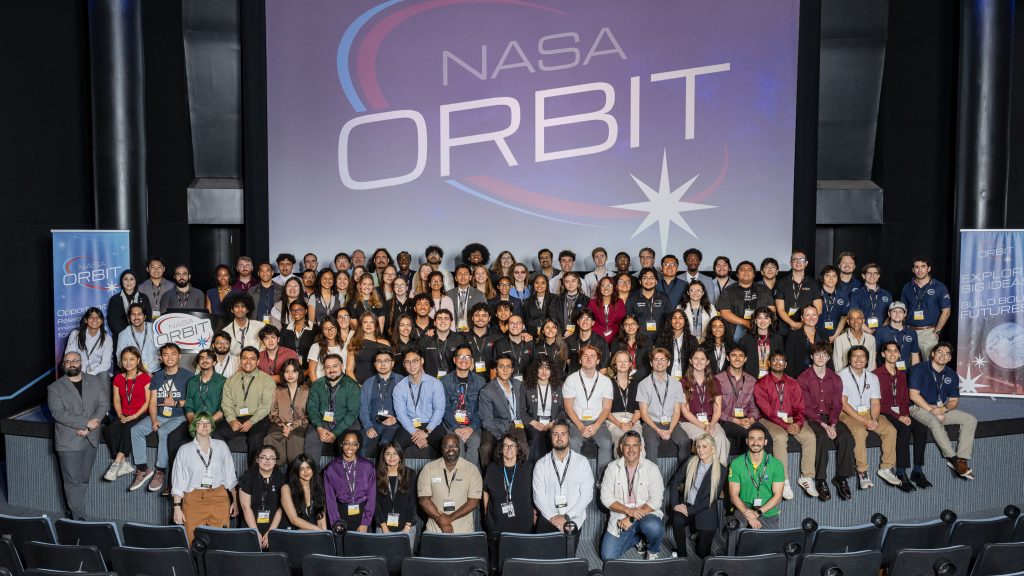
NASA ORBIT finalist teams, mentors, advisors, judges and STEM professionals gathered at Space Center Houston in Houston, Texas, from July 15 to 17, 2026, for the NASA ORBIT Pitch Showcase, an event that brought together months of research, collaboration and engineering design as teams competed to become 2026 NASA ORBIT winners.
Through the NASA ORBIT Challenge, students developed solutions inspired by real-world NASA missions and challenges while gaining experience in teamwork, technical problem-solving and communicating ideas to experts in the field. NASA ORBIT provides students with a pathway to engage with the STEM community and explore future opportunities in science, technology, engineering and entrepreneurship.
The Pitch Showcase brought finalist teams together for a series of activities designed to highlight their technical work and growth as emerging professionals in STEM. Students participated in speaker presentations, Career Conversations and roundtable discussions, connecting with STEM professionals who shared their unique journeys, lessons learned and advice for building successful careers.
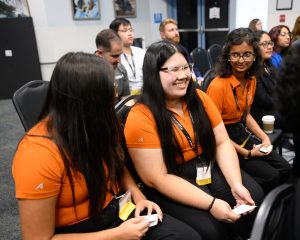
Team CRYO MORPH, University of Texas at Austin. Photo Credit: NASA
Teams shared their work through presentations, poster sessions, and judge Q&A discussions. Students engaged with experts, received feedback on their projects and experienced the collaborative process that fosters innovation and problem-solving within the STEM community.
Beyond the Classroom
For many participants, the value of ORBIT extends beyond the competition itself. Lindsay Goodwin, assistant professor at the New Jersey Institute of Technology (NJIT) and advisor to the Star Maker team, emphasized the unique learning opportunities that STEM competitions provide. “There’s more participatory learning. This is an experience that is really hard to give in the classroom in a given semester. They’re getting more hands-on experience by being a part of a competition and meeting others,” Goodwin said.
Students strengthened their technical knowledge while developing crucial skills in communication, teamwork, and project development. They built relationships with their peers and professionals who may become an integral part of their future career and STEM networks. “The other thing is building a giant cohort, building connections that they can maybe carry through their whole career,” Goodwin said.
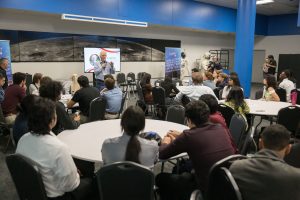
Bill Loughery presents during Career Conversations and Roundtable Discussions. Photo Credit: NASA
Developing Confidence Through Competitions
For students, the ORBIT challenge helped reshape how they view their own abilities.
Kevin Gutama, an electrical engineering student at NJIT, reflected on how participating in ORBIT helped transform an idea into something that felt truly achievable. “It’s definitely made me have more belief in myself, because when this concept was first introduced, it would seem sort of sci-fi. Can this actually be done? But through research and various, various meetings and calls, I’d say it can be done when you have a group of people who are actually focused and dedicated to it,” said Gutama.
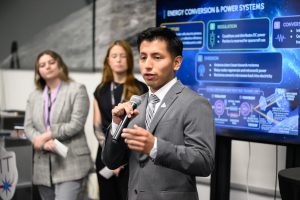
Kevin Gutama of Team Star Maker, New Jersey Institute of Technology (NJIT). Photo Credit: NASA/Robert Markowitz
Through collaboration, research, and mentorship, students learned how to approach complex challenges while gaining confidence in their ability to contribute to STEM fields.
New Pathways in STEM Education
The challenge introduced students to new areas of STEM and helped them see how their existing skills can contribute to larger engineering efforts.
Ricardo Emmanuel Vasquez, an electrical engineering student at College of the Canyons, shared how ORBIT influenced his perspective on future career and educational opportunities by exposing him to aerospace technology beyond the classroom.
“I think this is the first time I’ve been exposed to this much NASA and aerospace technology outside of a classroom. I’ve normally focused on circuits and more electronics as opposed to having electronics be a smaller part of a much bigger project,” said Vasquez.
ORBIT gives students the opportunity to collaborate across disciplines, combining perspectives from engineering, computer science, entrepreneurship, and scientific research to address complex challenges. The experience helped participants apply classroom knowledge in a collaborative environment and discover new possibilities for their future careers.
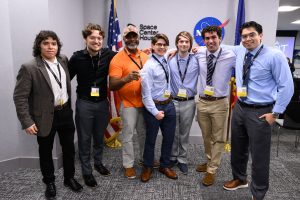
(Left to right) Nathan Segura, River Segura, judge Stephen Ozoigbo, Paul Beckett, Logan Jambe, Ricardo Vazquez and Derek Peraza of Team LDNOBLE during the NASA ORBIT Pitch Showcase. Photo Credit: NASA
Celebrating the NASA ORBIT Winners
After completing presentations, poster sessions, and discussions with judges, the 2026 NASA ORBIT Pitch Showcase concluded by recognizing this year’s winning teams:
ORBIT Space
1st Place: PRINCE
University of Puerto Rico at Mayagüez
Mayagüez, PR
2nd Place: CARE-D3
College of the Canyons
Santa Clarita, CA
Use of AI: MEKAH
Santa Ana College
Santa Ana, CA
People’s Choice: PRINCE
University of Puerto Rico at Mayagüez
Mayagüez, PR
ORBIT Earth
1st Place: Sol Invictus Engineering
Arizona State University
Tempe, AZ
2nd Place: PATCH
Texas A&M University
College Station, TX
Use of AI: Green Guard Systems
University of Massachusetts Boston
Boston, MA
People’s Choice: Flip Flops
University of Texas at Austin
Austin, TX
Integration Bonus:
MEKAH
Santa Ana College
Santa Ana, CA
Sol Invictus Engineering
Arizona State University
Tempe, AZ
Flip Flops
University of Texas at Austin
Austin, TX
Daedalus
Texas A&M University
College Station, TX
Program Support
Organized by NASA’s Office of STEM Engagement (OSTEM) through the Minority University Research and Education Project (MUREP) and administered by the Institute of Competition Sciences, our team is helping ORBIT students continue to turn ideas into impact to shape the future of space exploration
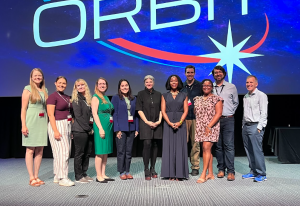
(Left to right) Amanda White (ICS), Katie Dolcimascolo (ICS), Jeanne Kumpunen (ICS), Elizabeth Sebastian Aloe (ICS), Liliana Farabaugh (ICS), Alicia Baturoni Cortez (NASA MUREP), Misti Moore (NASA MUREP), Matthew Hartman (ICS), Ebony Moreen (NASA MUREP), Joshua Neubert (ICS), Chris Frangione (ICS)
As teams continue their work through the Accelerator Program, students will have opportunities to further develop their ideas while building skills in entrepreneurship, communication, leadership, career pathways, and project development with support from mentors and STEM professionals.
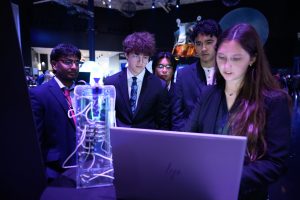
Team Daedalus, Texas A&M University. Photo Credit: NASA
The Institute of Competition Sciences (ICS) is proud to support NASA in delivering the ORBIT Challenge and creating opportunities for students to engage with NASA-inspired missions, mentorship, and STEM career pathways.
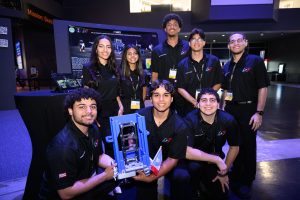
Team PRINCE,
University of Puerto Rico at Mayagüez. Photo Credit: NASA
The next NASA ORBIT Challenge will open registration on Sept. 14, 2026, giving a new group of student innovators the opportunity to begin their own journey through the program.
Follow along as we continue to share more about the teams, their project concepts, and behind-the-scenes moments from the showcase at Space Center Houston.